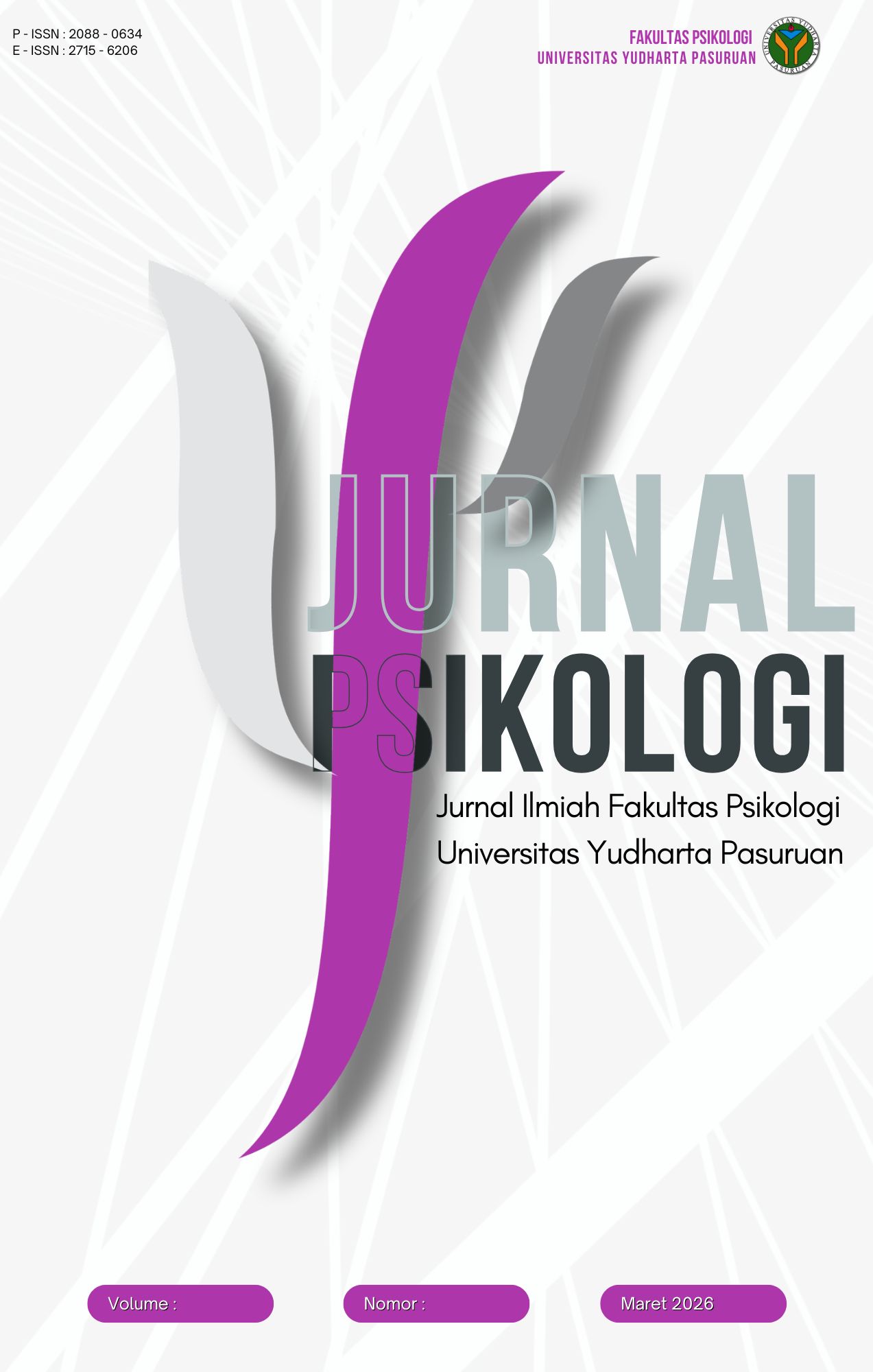
Effectiveness of Self-talk Techniques in Reducing Academic Stress among Undergraduate Students
DOI:
https://doi.org/10.35891/gmay5r06Keywords:
academic stress, self-talk, undergraduate studentAbstract
High academic demands in higher education often constitute a primary source of stress that negatively affects students’ psychological well-being. Despite the increasing prevalence of academic stress, many students lack effective cognitive strategies to independently manage such pressure. This study aimed to evaluate the effectiveness of self-talk techniques in reducing academic stress among university students. This study employed a quantitative approach using a pre-experimental one-group pretest–posttest design. The participants were students experiencing moderate to high levels of academic stress who underwent a self-talk intervention across several sessions. Academic stress levels were measured using the Depression Anxiety Stress Scale (DASS) and analyzed using the Wilcoxon test. The results indicated that the self-talk technique significantly reduced students’ academic stress. This reduction was reflected in a shift toward milder stress categories after the intervention. These findings support the hypothesis that self-talk is an effective mechanism for reducing psychological pressure. Consequently, this technique may serve as a viable strategy for improving students’ mental health issues. The findings further suggest that higher education institutions should integrate cognitive-based interventions into student counseling programs to foster mental resilience in the face of increasing academic pressures.
References
Agestianti, R., Mustafid, A. K., Andari, N. B., Azzahra, F. T. A., Pramesti, N. K. A. R., Zakariyya, F., & Lestari, S. (2024). Efektivitas Pelatihan Positive Self-Talk dalam meningkatkan Kepercayaan Diri. Jurnal Consulenza: Jurnal Bimbingan Konseling dan Psikologi, 7(1), 132–142. https://doi.org/10.56013/jcbkp.v7i1.2588
Amalina, D. R., Fadila Annisa, Nurhabibah, Patricia Viona Evelin, & Silfi Erisa Hestari. (2024). Descriptive Study of Academic Stress in Unp Psychology Students. In Trend : International Journal of Trends in Global Psychological Science and Education, 1(3), 109–113. https://doi.org/10.62260/intrend.v1i3.176
Borah, P., Chitrakar, N., & Khatiwora, D. (2022). Influence of Academic Stress on University Students Academic Performance. Shanlax International Journal of Arts, Science and Humanities, 10(1), 10–15. https://doi.org/10.34293/sijash.v10i1.4664
Córdova Olivera, P., Gasser Gordillo, P., Naranjo Mejía, H., La Fuente Taborga, I., Grajeda Chacón, A., & Sanjinés Unzueta, A. (2023). Academic stress as a predictor of mental health in university students. Cogent Education, 10(2). https://doi.org/10.1080/2331186X.2023.2232686
Deng, Y., Cherian, J., Khan, N. U. N., Kumari, K., Sial, M. S., Comite, U., Gavurova, B., & Popp, J. (2022). Family and Academic Stress and Their Impact on Students’ Depression Level and Academic Performance. Frontiers in Psychiatry, 13(June), 1–13. https://doi.org/10.3389/fpsyt.2022.869337
Freire, C., Ferradás, M. del M., Regueiro, B., Rodríguez, S., Valle, A., & Núñez, J. C. (2020). Coping Strategies and Self-Efficacy in University Students: A Person-Centered Approach. Frontiers in Psychology, 11. https://doi.org/10.3389/fpsyg.2020.00841
Graves, B. S., Hall, M. E., Dias-Karch, C., Haischer, M. H., & Apter, C. (2021). Gender differences in perceived stress and coping among college students. PLoS ONE, 16(8 August). https://doi.org/10.1371/journal.pone.0255634
Greco, A., Annovazzi, C., Palena, N., Camussi, E., Rossi, G., & Steca, P. (2022). Self-Efficacy Beliefs of University Students: Examining Factor Validity and Measurement Invariance of the New Academic Self-Efficacy Scale. Frontiers in Psychology, 12(January), 1–14. https://doi.org/10.3389/fpsyg.2021.498824
Klonoff-Cohen, H. (2022). College Students’ Opinions About Coping Strategies for Mental Health Problems, Suicide Ideation, and Self-Harm During COVID-19. Frontiers in Psychology, 13. https://doi.org/10.3389/fpsyg.2022.918891
Krispenz, A., Gort, C., Schültke, L., & Dickhäuser, O. (2019). How to reduce test anxiety and academic procrastination through inquiry of cognitive appraisals: A pilot study investigating the role of academic self-efficacy. Frontiers in Psychology, 10(AUG), 1–14. https://doi.org/10.3389/fpsyg.2019.01917
Parada, S., & Verlhiac, J. F. (2022). Growth mindset intervention among French university students, and its articulation with proactive coping strategies. Educational Psychology, 42(3), 354–374. https://doi.org/10.1080/01443410.2021.1917519
Pascoe, M. C., Hetrick, S. E., & Parker, A. G. (2020). The impact of stress on students in secondary school and higher education. International Journal of Adolescence and Youth, 25(1), 104–112. https://doi.org/10.1080/02673843.2019.1596823
Poots, A., & Cassidy, T. (2020). Academic expectation, self-compassion, psychological capital, social support and student wellbeing. International Journal of Educational Research, 99(June 2019), 101506. https://doi.org/10.1016/j.ijer.2019.101506
Popa-Velea, O., Pîrvan, I., & Diaconescu, L. V. (2021). The impact of self-efficacy, optimism, resilience and perceived stress on academic performance and its subjective evaluation: A cross-sectional study. International Journal of Environmental Research and Public Health, 18(17). https://doi.org/10.3390/ijerph18178911
Wulanndari, N. I., Gunardi, S., & Yuliza E. (2024). Hubungan Self-Talk dan Dukungan Sosial Terhadap Tingkat Kecemasan Menyusun Skripsi Pada Mahasiswa Keperawatan Semester Akhir Universitas Indonesia Maju Jakarta Tahun 2023. Vitalitas Medis : Jurnal Kesehatan dan Kedokteran, 1(3), 01–12. https://doi.org/10.62383/vimed.v1i3.129
Yin, Y., & Ko, K. S. (2023). The effect of group art therapy on acculturative and academic stress of Chinese graduate students in South Korea. Frontiers in Psychology, 14(July), 1–9. https://doi.org/10.3389/fpsyg.2023.1179778
Downloads
Published
Issue
Section
License
Copyright (c) 2026 Salianto Salianto

This work is licensed under a Creative Commons Attribution-ShareAlike 4.0 International License.
The author sends the manuscript with the understanding that if accepted for publication, the copyright of the article belongs to the author and retains publishing rights without restriction.
Copyright includes the non-exclusive right to reproduce and submit articles in all forms and media, including reprints, photographs, microfilm, and other similar reproductions, as well as translations. Reproduction of any part of this journal, its storage in the database, and its transmission by all forms of media, such as electronic, electrostatic and mechanical copies, photocopying, recording, magnetic media, etc.