Does Sharia Investment Knowledge and Investment Experience on Choosing Sharia Mutual Fund Investment Through the Investor Lifestyle
DOI:
https://doi.org/10.35891/ml.v16i2.6243Keywords:
Sharia Investment Knowledge, Investment Experience, Investor Lifestyle, Sharia Mutual Fund InvestmentAbstract
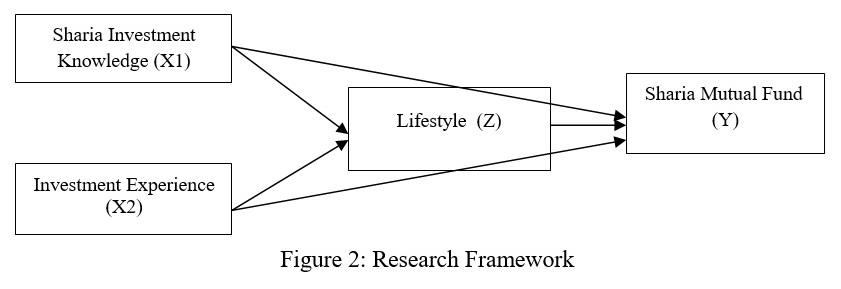
Introduction: This research aims to determine the effect of Sharia investment knowledge and investment experience in choosing Sharia mutual fund investment. Sharia investment has an important role in economic development, in the form of job creation, increasing income and purchasing power, equitable economic circulation and increasing gross domestic product (GDP).
Methods: The sample in this research were 100 investors registered with the Indonesia Stock Exchange. The data analysis technique used in this research uses SEM-PLS analysis techniques.
Results: The results of the research conducted with a confidence level of 95% based on sig. 5%, stating that sharia investment knowledge, investment experience and lifestyle effect decision making in choosing Sharia mutual fund investment.
Conclusion and suggestion: investors must have a good understanding of sharia investment knowledge and investment experience that is harmonized with the lifestyle of investors in investing in Sharia mutual funds in order to avoid future losses and in order to provide good benefits in the present and future
Downloads
References
Adhi, N., Aji, D. P., & Winarni, W. (2021). Reksadana syariah dan konvensional di Indonesia. Keunis, 9(2), 120–131.
Ajzen, I. (1991). The theory of planned behavior. Organizational Behavior and Human Decision Processes, 50(2), 179–211
Anggraini, R. T., & Santhoso, F. H. (2017). Hubungan antara gaya hidup hedonis dengan perilaku konsumtif pada remaja. Gadjah Mada Journal of Psychology (GamaJoP), 3(3), 131–140.
Arafah, S., & Miko, J. (2023). Implementasi Perilaku Manajemen Keuangan Syariah Dalam Mengatasi Masalah Keuangan Di Era Digitalisasi. Dinamis: Jurnal Pengabdian Kepada Masyarakat, 3(1), 56–64.
Arafah, S., & Miko, J. (2024). Pengaruh Financial Literacy Dan Financial Knowledge Terhadap Financial Inclusion Pada Pelaku Umkm Baznas Sumatera Utara. PROFJES: Profetik Jurnal Ekonomi Syariah, 3(2).
Awais, M., Laber, M. F., Rasheed, N., & Khursheed, A. (2016). Impact of financial literacy and investment experience on risk tolerance and investment decisions: Empirical evidence from Pakistan. International Journal of Economics and Financial Issues, 6(1), 73–79.
Barlian, E. (2018). Metodologi penelitian kualitatif & kuantitatif.
Chou, S.-R., Huang, G.-L., & Hsu, H.-L. (2010). Investor attitudes and behavior towards inherent risk and potential returns in financial products. International Research Journal of Finance and Economics, 44(1), 16–30.
Darmawan, A., Kurnia, K., & Rejeki, S. (2019). Pengetahuan investasi, motivasi investasi, literasi keuangan dan lingkungan keluarga pengaruhnya terhadap minat investasi di pasar modal. Jurnal Ilmiah Akuntansi Dan Keuangan, 8(2), 44–56.
Fachrudin, K. R., & Fachrudin, K. A. (2016). The influence of education and experience toward investment decision with moderated by financial literacy. Polish Journal of Management Studies, 14.
Fatra, O. S. (2014). Analisis Perbandingan Kinerja Reksadana Konvensional dengan Reksadana Syariah di Indonesia.
Firdaus, R. A., & Ifrochah, N. (2022). Pengaruh pengetahuan investasi dan motivasi investasi terhadap minat investasi mahasiswa Politeknik Keuangan Negara STAN di pasar modal. Jurnal Acitya Ardana, 2(1), 16–28.
Ghozali, I. (2021). Stuctural Equation Modeling dengan Metode Alternative Partial Least Squares (PLS). Badan Penerbit Universitas Diponegoro.
Harahap, L. P. S., & Arafah, S. (2024). Faktor-Faktor yang Mempengaruhi Keputusan Nasabah Memilih Pembiayaan Multiguna-ASN (Studi Kasus: PT. Bank Sumut Syariah KCPSY Kota Baru Marelan). Innovative: Journal Of Social Science Research, 4(6), 5163–5177.
Hasan, A., Nasution, S. S., Nasution, H., & Arafah, S. (2024). Determinants Of MSMEs Welfare Through Sharia Financial Literacy In Ultra-Micro Financing. Integrated Journal of Business and Economics, 8(3), 274–289.
HT, H. A., Meiria, E., & Arafah, S. (2024). Faktor-Faktor Yang Mempengaruhi Pelaku UMKM Memilih Pembiayaan iB Muamalat Modal Kerja Melalui Inklusi Keuangan Syariah. Jurnal Ilmiah Ekonomi Islam, 10(3).
Iltiham, M. F., & Nizar, M. (2024). Implementation of Digital Transformation in HIPSI SMEs: A Qualitative Analysis of Strengthening Local Community Digital Capabilities. MALIA: Jurnal Ekonomi Islam, 15(2), 158–172.
Krische, S. D. (2019). Investment experience, financial literacy, and investmentâ€related judgments. Contemporary Accounting Research, 36(3), 1634–1668.
Lisdayanti, R., & Hakim, L. (2021). Pengaruh Pengetahuan Investasi Syariah Produk Investasi Syariah Dan Modal Minimal Mahasiswa Terhadap Minat Investasi Bank Syariah Dengan Risiko Investasi Sebagai Variabel Intervening Pada Mahasiswa Perguruan Tinggi Negeri Kota Surabaya. Jurnal Masharif Al-Syariah: Jurnal Ekonomi Dan Perbankan Syariah, 6(1), 13–28.
Magdalena, M., & Wirawan, M. (2023). The Role of Profit Perception, Firm Capital and Investment Knowledge on Intention to Invest in Sharia Stocks. JSSBS (Journal of Social Science and Business Studies), 1(1), 1–5.
Mandagie, Y. R. O., Febrianti, M., & Fujianti, L. (2020). Analisis Pengaruh Literasi Keuangan, Pengalaman Investasi dan Toleransi Risiko Terhadap Keputusan Investasi (Studi Kasus Mahasiswa Akuntansi Universitas Pancasila). RELEVAN: Jurnal Riset Akuntansi, 1(1), 35–47.
Markonah, M., & Kusnadi, K. (2024). The role of investment knowledge, student perceptions, and technological advances in affecting investment interests in sharia capital markets. Edelweiss Applied Science and Technology, 8(4), 325–335.
Mutawally, F. W., & Haryono, N. A. (2019). Pengaruh financial literacy, risk perception, behavioral finance dan pengalaman investasi terhadap keputusan investasi mahasiswa surabaya. Jurnal Ilmu Manajemen (JIM), 7(4), 942–953.
Nagpal, S., & Bodla, B. S. (2009). Impact of investors’ lifestyle on their investment pattern: an empirical study. IUP Journal of Behavioral Finance, 6(2), 28.
Negara, A. K., & Febrianto, H. G. (2020). Pengaruh Kemajuan Teknologi Informasi Dan Pengetahuan Investasi Terhadap Minat Investasi Generasi Milenial Di Pasar Modal. Business Management Journal, 16(2), 81–95.
Qomariah, N., Sari, M. I., & Budiarti, D. A. (2016). Perbandingan kinerja reksadana syariah dan reksadana konvensional (pada reksadana saham dan reksadana pendapatan tetap yang terdaftar di BEI periode 2010-2014). Jurnal Keuangan Dan Perbankan, 20(3), 417â – 427.
Sabrina, P., & Panorama, M. (2024). Pengaruh Gaya Hidup Dan Personality Traits Terhadap Keputusan Berinvestasi Di Pasar Modal Pada Generasi Z Kota Palembang. Jurnal Akuntansi Keuangan Dan Bisnis, 2(2), 501–510.
Sani, N., & Paramita, V. S. (2024). Pengaruh Pengalaman Investasi, Risk Tolerance, Dan Sosial Media Terhadap Keputusan Investasi Dengan Literasi Keuangan Sebagai Variabel Moderasi (Studi Pada Investor Generasi Z Jawa Barat). Equilibrium: Jurnal Ilmiah Ekonomi, Manajemen Dan Akuntansi, 13(1), 134–147.
Sampoerno, A. E., & Asandimitra, N. (2021). Pengaruh financial literacy, income, hedonism lifestyle, self-control, dan risk tolerance terhadap financial management behavior pada generasi milenial kota Surabaya. Jurnal Ilmu Manajemen, 9(3), 1002–1014.
Syafika, N., Wahyuni, E. S., & Hartini, K. (2024). Revealing Gen Z’s Interest in Sharia Investment in The Capital Market. MALIA: Jurnal Ekonomi Islam, 16(1), 56–69.
Syah, A., & Barsah, A. (2022). Pengaruh Gaya Hidup dan Literasi Keuangan Terhadapa Keputusan Berinvestasi Generasi Milinial Kota Tangerang Selatan. Scientific Journal of Reflection: Economic, Accounting, Management and Business, 5(3), 649–655.
Syauqina, A. H., & Munandar, A. (2023). The Influence of Education Level, Financial Literacy and Lifestyle on Investment Decision. SAR (Soedirman Accounting Review): Journal of Accounting and Business, 8(2), 162–170.
Triana, O. F., & Yudiantoro, D. (2022). Pengaruh literasi keuangan, pengetahuan investasi, dan motivasi terhadap keputusan berinvestasi mahasiswa di pasar modal syariah. SERAMBI: Jurnal Ekonomi Manajemen Dan Bisnis Islam, 4(1), 21–32.
Wibowo, A. (2019). Pengaruh pengetahuan investasi, kebijakan modal minimal investasi, dan pelatihan pasar modal terhadap minat investasi (Studi kasus mahasiswa FE Unesa yang terdaftar di Galeri Investasi FE Unesa). Jurnal Ilmu Manajemen (JIM), 7(1).
Wulandari, A., & Andni, R. (2024). The Influence of Financial Performance, Corporate Governance, and Trading Volume on Islamic Stock Prices (Case Study on ISSI BUMN Sector in 2011-2023). MALIA: Jurnal Ekonomi Islam, 16(1), 70–89.
Wulandari, C. H., Siregar, S., & Daulay, A. N. (2023). The Potential of Stock Endowment in Indonesia as an Instrument for Islamic Economic Development. MALIA: Jurnal Ekonomi Islam, 14(2), 309–325.
Wulandari, P., & Nasik, K. (2023). The Sharia Compliance Analysis of the Mudharabah Contract at PT Permodalan Nasional Madani Mekaar Syariah. MALIA: Jurnal Ekonomi Islam, 15(1), 105–116.