From Content to Connectivity: Exploring #HalalLifestyle Networks on Instagram through Social Network Analysis
DOI:
https://doi.org/10.35891/h5r7h483Keywords:
Social network analysis, destination image, destination branding, user generated content, Indonesia, HalalLifestyle, InstagramAbstract
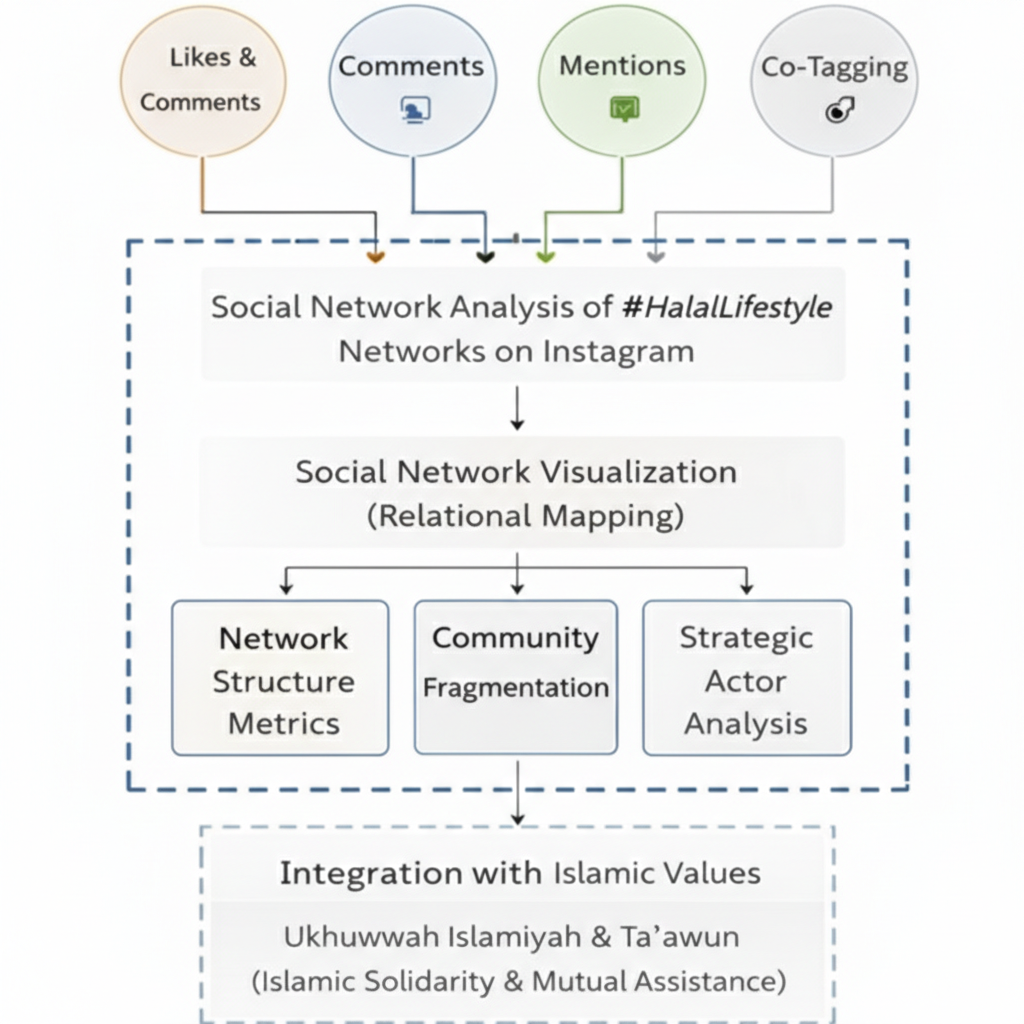
Purpose: This study aims to examine the structural characteristics of the #HalalLifestyle social network on Instagram and to understand how interaction patterns and key actors shape the dissemination of halal lifestyle discourse in digital spaces.
Design/methodology/approach: This research adopts a quantitative descriptive approach using Social Network Analysis (SNA). Data were collected from 1,842 public Instagram posts containing the hashtag #HalalLifestyle over a three-month period, involving 1,127 actors and 9,486 interactions. Network density, modularity, and centrality measures were employed to analyze network structure and identify key actors.
Findings: The results indicate that the #HalalLifestyle network is broad but fragmented, characterized by low density and high modularity. The network exhibits a core–periphery structure, where a small number of influencers, halal brands, and Muslim digital communities dominate information flows and connect thematic clusters such as halal food, modest fashion, and Muslim-friendly travel. This structure reflects an unequal distribution of influence within the network.
Practical implications: These findings highlight the importance of collaborative strategies to strengthen cross-cluster connectivity in the digital halal ecosystem. Understanding network structures can support more inclusive communication strategies and reinforce the ethical values of halal lifestyle discourse in social media.
Originality/value: This study contributes to the literature by applying Social Network Analysis to halal lifestyle discourse on Instagram and integrating network findings with Islamic value perspectives, offering empirical insights into the dynamics of halal lifestyle construction in digital environments.
Downloads
References
Ab Talib, M. S., Siti, S. S., Abdul Hamid, A. B., & Ai Chin, T. (2016). Emerging Halal food market: an Institutional Theory of Halal certificate implementation. Management Research Review. https://doi.org/10.1108/MRR-06-2015-0147
Ade Irma, D. H. (2019). Pemanfaatan instagram dalam promosi aceh halal tourism. Pemanfaatan Instagram Dalam Promosi Aceh Halal Tourism.
Al Ariqi, M. A. (2022). PENGARUH GAYA HIDUP HALAL TERHADAP PERTUMBUHAN EKONOMI INDONESIA. SIYAR Journal. https://doi.org/10.15642/siyar.2022.2.2.213-223
Alshehri, A. (2024). Social Media in Tourism: A Twitter (X) Social Graph Approach to #Alula. Journal of Tourism and Services. https://doi.org/10.29036/jots.v15i28.715
Altuntas, F., Altuntas, S., & Dereli, T. (2022). Social network analysis of tourism data: A case study of quarantine decisions in COVID-19 pandemic. International Journal of Information Management Data Insights. https://doi.org/10.1016/j.jjimei.2022.100108
Amir Abdullah, A., Daud Awang, M., & Abdullah, N. (2020). Islamic Tourism: The Characteristics, Concept and Principles. KnE Social Sciences. https://doi.org/10.18502/kss.v4i9.7326
Anwar, M. M. (2025). Halal fashion insights: understanding brand dynamics in consumer perception. Journal of Islamic Marketing. https://doi.org/10.1108/JIMA-04-2024-0149
Arsiati, R., & Eri Puspita, R. (2023). DIGITAL MARKETING FOR HALAL FOOD PRODUCT: THE EFFECT OF CUSTOMER REVIEW, HALAL CONTENT, AND USE OF E-PAYMENT. Journal of Islamic Enterpreneurship and Management. https://doi.org/10.18326/jiem.v3i2.74-91
Az Zahra, S. F., & Ira Wirasari. (2023). Analisis Visual pada Konten Instagram Halal Corner. JURNAL RUPA. https://doi.org/10.25124/rupa.v8i2.5737
Blanco-Moreno, S., González-Fernández, A. M., Muñoz-Gallego, P. A., & Casaló, L. V. (2024). Understanding engagement with Instagram posts about tourism destinations. Journal of Destination Marketing and Management. https://doi.org/10.1016/j.jdmm.2024.100948
Casado-Montilla, J., & Pulido-Fernández, J. I. (2025). Social network analysis and tourism vocation in a coopetitive environment. Tourism Recreation Research. https://doi.org/10.1080/02508281.2024.2330230
Casanueva, C., Gallego, Á., & García-Sánchez, M. R. (2016). Social network analysis in tourism. Current Issues in Tourism. https://doi.org/10.1080/13683500.2014.990422
Darojatun, R. (2023). Konstruksi Kesalehan Simbolik Dalam Gaya Hidup Islami di Media Sosial. AdZikra : Jurnal Komunikasi & Penyiaran Islam. https://doi.org/10.32678/adzikra.v13i1.5669
Durrani, B. A., Lecturer, S., Ivanauskien, N., Volung, J., Rahmani-Nejad, L., Firoozbakht, Z., Taghipoor, A., Arokiasamy, A. R. A., Pourdehghan, A., Tjan, S., Sukamto, R., Lumintan, D. B., Dhurup, M., Mafini, C., Dumasi, T., Kheng, L. L., Mahamad, O., Ramayah, T., Mosahab, R., … Wirawan, V. (2014). Implementation of E-Government in Welcoming the Contemporary Industrial Revolution 4.0 Era in Indonesia. International Journal of Marketing Studies.
Fadiah Cahya Amelia, Arfian Suryasuciramdhan, Ika Choirunnissa, Risti Septyani, & Mario Maulana. (2025). Pemanfaatan Media Sosial Instagram dalam Membangun Brand Image Wardah sebagai Produk Kosmetik Halal di Indonesia. Jurnal Riset Rumpun Ilmu Sosial, Politik Dan Humaniora. https://doi.org/10.55606/jurrish.v4i2.4876
Fernando, Y., Wahyuni-TD, I. S., Zainul Abideen, A., & Mergeresa, F. (2023). Traceability technology, halal logistics brand and logistics performance: religious beliefs and beyond. Journal of Islamic Marketing. https://doi.org/10.1108/JIMA-06-2020-0183
Ghefira Nurfadhila. (2024). RANCANGAN DAN PENERAPAN MEDIA SOSIAL INSTAGRAM @PITEK_NDESO SEBAGAI MEDIA PROMOSI PADA PITEK NDESO CATERING TUBAN. Jurnal Bisnis Terapan. https://doi.org/10.24123/jbt.v8i2.6692
Hamdi, B. (2022). Prinsip dan Etika Konsumsi Islam (Tinjauan Maqashid Syariah). Islamadina : Jurnal Pemikiran Islam. https://doi.org/10.30595/islamadina.v23i1.10821
Hernández, R., Gutiérrez, I., & Castro, J. (2025). Social Network Analysis: A Novel Paradigm for Improving Community Detection. International Journal of Computational Intelligence Systems. https://doi.org/10.1007/s44196-025-00812-9
Insani, N. A. (2020). THE USE OF INSTAGRAM TO IMPROVE STUDENTS’ WRITING SKILLS IN DESCRIPTIVE TEXT. In the Faculty of Teacher Training and Education Muhammadiyah.
Islam, J. E., & Prastiwi, R. (2025). PENGARUH GAYA HIDUP HALAL TERHADAP PERILAKU KONSUMSI GENERASI MILENIAL. Jurnal Ekonomi Islam.
Jailani, N., & Adinugraha, H. H. (2022). The Effect of Halal Lifestyle on Economic Growth in Indonesia. Journal of Economics Research and Social Sciences. https://doi.org/10.18196/jerss.v6i1.13617
Jannah, S. M., & Wijayanti, D. M. (2025). Improving Sustainable Performance for MSMEs Through Halal Supply Chain Management. Jihbiz : Jurnal Ekonomi, Keuangan Dan Perbankan Syariah. https://doi.org/10.33379/jihbiz.v9i1.6287
Kuehn, K. M. (2021). Instagram: visual social media cultures. Communication Research and Practice. https://doi.org/10.1080/22041451.2021.1927563
Mawardi, I., Huda, A. F., & Risqiyah, L. (2024). Trens Of Hajj And Umrah On Intagram: Commercialization And Self-Reprensentation. Multazam : Jurnal Manajemen Haji Dan Umrah.
Maysyaroh, S., & Akbar, K. Y. (2025). Halal Lifestyle: A Bibliometric Analysis. Journal of Islamic Economics Literatures. https://doi.org/10.58968/jiel.v5i2.576
Mingka, A. F., Syahriza, R., & Syakir, A. (2024). The Influence of halal lifestyle and digital technology on gen Z’s decision to use Islamic Banking services. SERAMBI: Jurnal Ekonomi Manajemen Dan Bisnis Islam. https://doi.org/10.36407/serambi.v6i3.1447
Mufidah, M., & Rasyid, L. H. H. A. A. (2024). Pengaruh Halal Lifestyle , Literasi Keuangan Syariah , dan Islamic Branding. Al-Intifaq.
Muhammad Nizar, & Antin Rakhmawati. (2022). Tantangan dan Strategi Pemasaran Produk Halal di Indonesia. MALIA (TERAKREDITASI). https://doi.org/10.35891/ml.v13i1.2872
Musthofa, B. M., Pranita, D., SattarRasul, M., & Haidlir, B. M. (2023). Institutional Dynamics of Halal Tourism Development In Indonesia and Malaysia. Journal of ASEAN Studies. https://doi.org/10.21512/jas.v11i1.9431
Naumi, A. T. (2023). The Use of Instagram in the Halal Food Information Sharing among Virtual Communities. MIMBAR : Jurnal Sosial Dan Pembangunan. https://doi.org/10.29313/mimbar.v39i1.2157
NGUYEN, O. T. (2020). Factors Affecting the Intention to Use Digital Banking in Vietnam. The Journal of Asian Finance, Economics and Business, 7(3), 303–310. https://doi.org/10.13106/jafeb.2020.vol7.no3.303
Nizar, M., Rakhmawati, A., & Sania, B. (2025). Optimizing the Role of Waqf in the Development of Halal Tourism in Indonesia. JURISMA: Jurnal Riset Bisnis & Manajemen, 15(1).
Noviyanti, R., & Albab, M. U. (2024). The Potential of Halal Lifestyle Enthusiats Content on Social Media Towards Enchanging Halal Awareness in Indonesia. AL-IKTISAB: Journal of Islamic Economic Law. https://doi.org/10.21111/aliktisab.v7i2.11724
Nusran, M., Nasution, E. N., Prayitno, M. A., & Sudarmanto, E. (2023). Halal Certification in The Digital Age: Leveraging Online Platforms for Enhanced Transparency and Accessibility. Jurnal Ekonomi, Akuntansi Dan Manajemen Indonesia. https://doi.org/10.58471/jeami.v2i01.379
Oktapiani, N., Salman Al Farisi, M., Herawati, E., & Bina Mandiri Bogor, S. (2025). Halal Lifestyle, Awareness, and Consumer Behavior: Implications for the Halal Food Market in Dayeuh Village, Indonesia. Jeksyah: Islamic Economics Journal.
Peña-Acuña, B., & Jaramillo, J. F. A. (2024). Instagram and Youtube, visual culture and university education. VISUAL Review. International Visual Culture Review / Revista Internacional de Cultura . https://doi.org/10.62161/revvisual.v16.5206
Purnama Sariati, N. (2020). LIFESTYLE GENERASI MILLENIAL DALAM KERANGKA PASAR EKONOMI HALAL. ISTITHMAR: Jurnal Pengembangan Ekonomi Islam. https://doi.org/10.30762/itr.v3i2.2051
Radjab, Enny Jam’an, A. (2017). Metode Penelitian Bisnis. Syria Studies.
Rahmawati, A., Tutiasri, R., & Febriyanti, S. (2024). Curating culture: Instagram and the visual representation of heritage tourism in Surabaya. Jurnal Studi Komunikasi (Indonesian Journal of Communications Studies). https://doi.org/10.25139/jsk.v8i1.6785
Risdiyani, A. (2023). PENGARUH HALAL KNOWLEDGE, ISLAMIC RELIGIOSITY, DAN HALAL LIFESTYLE TERHADAP PENILAIAN PRODUK KOSMETIK DAN KEPUTUSAN PEMBELIAN KOSMETIK HALAL. Cross-Border.
Rodríguez-Herrera, I. M., Casado-Montilla, J., López-Molina, D., & Pulido-Fernández, J. I. (2025). Applying Stakeholder Theory and Social Network Analysis when studying the social capital of tourism destinations. PASOS Revista de Turismo y Patrimonio Cultural. https://doi.org/10.25145/j.pasos.2025.23.041
Saeidi, S., & Baradari, Z. (2023). Examining the correlation between metrics in the Instagram social network to identify fake pages and improve marketing. Computers in Human Behavior Reports. https://doi.org/10.1016/j.chbr.2023.100341
Sahira, F., Yafiz, M., & Jannah, N. (2024). Analysis of the role of the halal center in promoting msme halal certification to improve halal lifestyle in medan city. COSTING:Journal of Economic, Business and Accounting.
Seok, H., Barnett, G. A., & Nam, Y. (2021). A social network analysis of international tourism flow. Quality and Quantity. https://doi.org/10.1007/s11135-020-01011-8
Shah, S. A. A., Sukmana, R., Fianto, B. A., Ahmad, M. A., Usman, I. U., & Mallah, W. A. (2020). Effects of Halal social media and customer engagement on brand satisfaction of Muslim customer: Exploring the moderation of religiosity. Journal of Islamic Marketing. https://doi.org/10.1108/JIMA-06-2019-0119
Situmorang, D. (2024). Social Media and Business Ethics in The Sharia Economy. Jurnal Ilmiah Teunuleh.
Smith, M. a, Rainie, L., Himelboim, I., & Shneiderman, B. (2014). Mapping Twitter Topic Networks: From Polarized Crowds to Community Clusters. The Pew Research Center.
Sulaiman, A., Feizollah, A., Mostafa, M. M., & Zakaria, Z. (2023). Profiling the halal food consumer on Instagram: integrating image, textual, and social tagging data. Multimedia Tools and Applications. https://doi.org/10.1007/s11042-022-13685-3
Sun, Z., Liu, L., Pan, R., Wang, Y., & Zhang, B. (2025). Tourism and economic growth: The role of institutional quality. International Review of Economics and Finance. https://doi.org/10.1016/j.iref.2025.103913
Surbakti, P., Surbakti, P. F. S., Syahriza, R., & Syakir, A. (2025). The Influence of halal awareness, lifestyle, halal literacy on halal certification interest in culinary MSMEs. Manajemen Dan Bisnis.
Susilowati, F. D., Ridlwan, A. A., Fikriyah, K., & Timur, Y. P. (2023). Instagram Halal Cosmetics Reviews: Emotion Polarity and Presentation Modality Effects on Information Quality and Purchase Intention. IQTISHODUNA: Jurnal Ekonomi Islam. https://doi.org/10.54471/iqtishoduna.v12i2.2610
Tahalea, S. P., Salouw, E., & Wibowo, A. W. A. (2022). Tourism on instagram: A social network analysis. Barekeng. https://doi.org/10.30598/barekengvol16iss1pp197-204
Wajdi, M. F., Aji, H. M., & Muhammad, S. (2020). Factors affecting the intention to purchase halal cosmetics on Instagram: E-WOM and brand image. Asian Journal of Islamic Management (AJIM). https://doi.org/10.20885/ajim.vol2.iss1.art1
Zakiah, S. (2022). TEORI KONSUMSI DALAM PERSPEKTIF EKONOMI ISLAM. El-Ecosy : Jurnal Ekonomi Dan Keuangan Islam. https://doi.org/10.35194/eeki.v2i2.2515