The Influence of Islamic Financial Literacy and Peer Influence on Islamic Entrepreneurial Behavior of UIN North Sumatra Medan Students
DOI:
https://doi.org/10.35891/e4p46r02Keywords:
Islamic Financial Literacy, Peer Influence, Islamic Entrepreneurial BehaviorAbstract
Introduction: Islamic entrepreneurial behavior views business activities not merely as a means of profit, but as an implementation of the values of monotheism, trustworthiness, justice, and welfare. However, student entrepreneurial interest remains relatively low, while Islamic financial literacy and social environmental influences are suspected to be important factors in shaping Islamic value-based business behavior. This study aims to analyze the influence of Islamic financial literacy and peer influence on Islamic entrepreneurial behavior among students at UIN Sumatera Utara Medan.
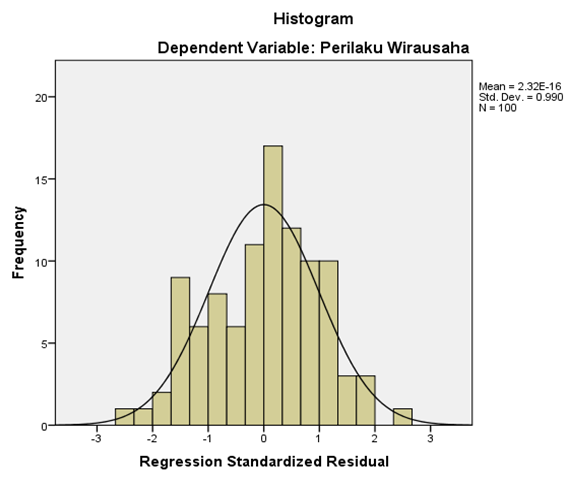
Methods: The study used a quantitative approach with a survey method on 100 students selected through simple random sampling. Data were collected using a Likert scale questionnaire and analyzed using multiple linear regression using SPSS 22. Instrument tests, classical assumptions, t-tests, F-tests, and coefficients of determination were used to test the hypotheses.
Results: The results show that Islamic financial literacy has a positive and significant effect on Islamic entrepreneurial behavior (t = 10.637; p < 0.05). Conversely, peer influence has no significant partial effect (t = 0.134; p > 0.05). Simultaneously, both variables have a significant effect (F = 57.252; p < 0.05) with an explanatory contribution of 54.1%.
Conclusion and suggestion: Sharia financial literacy is a primary factor in shaping Islamic entrepreneurial behavior, while peer influence is supportive. Strengthening the entrepreneurship curriculum based on the principles of sharia, training in Islamic financial literacy, and developing students' spiritual character are recommended to foster ethical, independent, and blessing-oriented entrepreneurs.
Downloads
References
Adha, M. A., Nahar, F. H., & Fathurrahman, A. (2025). The Analysis of Financing Risk and Its Mitigation Based on Gender : A Study on Islamic Banks in Indonesia. International Journal of Islamic Economics and Finance (IJIEF), 8(2), 293–308.
Agustin, N. F., Nurjannah, D., & Fitriasari, F. (2023). The Effect of Financial Literacy, Attitude , Subjective Norm , and Religiosity on Investment Intention in The Islamic Capital Market. Jurnal Manajemen Bisnis Dan Kewirausahaan, 3(4), 1–21. https://doi.org/10.22219/jamanika.v3i03.29328
Anindita, N., Sukmaningrum, P. S., & Rusmita, S. A. (2024). Impact of Islamic Financial Literacy , Money Attitude , and Social Environment on Young Muslim Couples ’ Financial Planning. Airlangga Journal of Innovation Management, 05(03), 449–462.
Apriantoro, M. S., Herviana, J., Surakarta, U. M., Surakarta, U. M., & Surakarta, U. M. (2023). Sharia Financial Literacy: Research Trends and Directions for Future Inquiry. Journal of Islamic Economic Laws, 6(2), 19–40.
Ashar, K., & Setyanti, A. M. (2022). Islamic Financial Literacy on the Educated Millennial Generation in a Campus Environment ( Case Study of Students in the Faculty of Economics , Brawijaya. Business and Economics Research Journal, 2(1), 241–251.
Azmi, M., Nur, S., & Ab, A. (2017). Factors determining Islamic financial literacy among undergraduates. Journal of Emerging Economies and Islamic Research, 5(2), 67–76.
Balaka, M. Y. (2022). Metode penelitian Kuantitatif. Metodologi Penelitian Pendidikan Kualitatif, 1, 130.
BPS. (2025). Indeks pembangunan manusia 2024 (Vol. 19). Jakarta: Badan Pusat Statistik.
Dwi, A., & Rahmatia, A. (2021). Islamic Financial Literacy Index of Students : Bridging SDGs of Islamic Finance. Economics and Finance in Indonesia, 67(1), 34–50.
Faizuddin, M., Zuki, M., Arif, M., Ishak, F., & Hassan, M. H. (2025). A systematic literature review on the determinants of Islamic financial literacy among individuals. The Malaysian Journal of Islamic Sciences, 37(3), 1–21.
Gunawan, A., & Siregar, S. (2021). Islamic Financial Literacy and Financial Behavior : The case of Muhammadiyah Community in Medan City. Journal of Accounting and Investment, 22(3). https://doi.org/10.18196/jai.v22i3.10043
Guntur, M., & Kaban, R. F. (2021). The Effect Of Islamic Financial Literacy , Religiosity , And Lifestyle On Decision To Use Islamic Bank Products For Millennial Generation In Greater Jakarta. Management Research Studies Journal, 2(2), 67–77.
Hafizah, S., Rahim, A., Rashid, R. A., & Hamed, A. B. (2016). Islamic Financial Literacy and its Determinants among University Students : An Exploratory Factor Analysis. International Journal of Economics and Financial Issues, 6(7), 32–35.
Handayani, A. A., Azis, M., & Hasan, M. The Influence of Financial Literacy , Electronic Money , Lifestyle and Self-Control on Student Consumptive Behavior. , Proceeding of The International Conference on Science and Advanced Technology § (2021).
Handayani, L., Ainun, B., & Fahmi, Y. (2021). The Effect of Islamic Financial Literacy and Financial Inclusion toward Financial Planning among Millennial : Financial Behaviour as an Intervening Variable. International Journal of Emerging Issues in Islamic Studies (IJEIIS), 1(2), 60–67.
Hidayat, A. N., & Diana, D. (2024). Navigating Islamic Investments : The Role of Islamic Financial Literacy , Religiosity , and Motivation using PLS-SEM. Airlangga Journal of Innovation Management, 05(02), 278–290.
Ilyana, S., Purna, F. P., & Friantoro, D. (2021). Islamic Financial Literacy and Its Effects on Intention to Use Islamic Bank. Ihtifaz: Journal of Islamic Economics, Finance, and Banking, 4(2), 97–110.
Imsar, Nurhayati, & Harahap, I. (2023). Analysis Of Digital Economic Interactions, Economic Openness, Islamic Human Development Index (I-HDI) And Investment On Indonesia’s GDP Growth. Edukasi Islami: Jurnal Pendidikan Islam, 12, 753–772.
Iqmal, M., Kamaruddin, H., Hanefah, M. M., Shaharuddin, A., Mohammed, A., Ayedh, A., & Othman, N. A. (2023). Development of Fintech in Islāmic Social Finance in Malaysia. International Journal of Economics, Management and Accounting, 31(1), 177–204.
Khasanah, Miftakhul, Rizki Aminullah, D. S. (2022). Determinants of Islamic Financial Literacy Index : Comparison Based on Indonesia. Jurnal AFKARUNA, 18(1), 185–206.
Khoiriyah Ilfita, C. C. (2021). Theinfluenceof Sharia Financialliteracy, Religiosity, Andperception Of Saving Students’ Interest In Sharia Banks. Indonesian Interdisciplinary Journal of Sharia Economics (IIJSE), 3(2), 113–134.
Latifah, L., Rodoni, A., & Aziz, R. M. (2025). The Empowerment of MSMEs through Islamic P2P Financing : A Value-Based Social Entrepreneurship Framework. International Journal of Islamic Economics and Finance (IJIEF), 8(2), 246–267.
Linda Hetri Suriyanti, Fadly Ardiansyah, N. F. (2025). Jurnal ApThe Influence Of Islamic Religiosity On Students’ Financial Well-Being Through Financial Behavior: Moderating Role Of Financial Literacylikasi Akuntansi. Jurnal Aplikasi Akuntansi, 10(1), 321–334. https://doi.org/10.29303/jaa.v10i1.688
Marliyah, M., & Nurbaiti, Nurbaiti, Hamdun, N. (2022). Strategi Pelaku Bisnis Electronic Commerce (E-Commerce). Jurnal Locus Penelitian Dan Pengabdian, 1(2), 60–67. https://doi.org/10.58344/locus.v1i2.13
Muslichah, M., Hidayah, Y., Putra, S., Abdullah, R., & Kadir, A. (2023). Islamic Financial Literacy and Financial Inclusion : Examining the Intervening Role of Financial Self-Efficacy. International Journal of Islamic Economics and Finance (IJIEF), 6(2), 181–200.
Nawi, F. A., Ridhwan, M., & Aziz, A. (2022). Conceptualizing the Influence of Religiosity and Islamic Financial Knowledge on Islamic Financial Behaviours. International Journal of Academic Research in Business and Social Sciences, 12(11), 2492–2510. https://doi.org/10.6007/IJARBSS/
Nisrina Salwa, T. I. F. R. (2022). Pengaruh Literasi Keuangan dan Financial Technology Terhadap Inklusi Keuangan Mahasiswa UINSU. Jurnal Manajemen Akuntansi, 33(1), 1–12.
Nurbaiti, N., Asmuni, A., Soemitra, A., Imsar, I., & Aisyah, S. (2023). Behavior analysis of MSMEs in Indonesia using fintech lending comparative study between sharia fintech lending and conventional fintech lending. JPPI (Jurnal Penelitian Pendidikan Indonesia, 9(4), 12–32. https://doi.org/https://doi.org/10.29210/020232273
Nurbaiti, N., Asmuni, A., Soemitra, A., Imsar, I., & Aisyah, S. (2023). Behavior analysis of MSMEs in Indonesia using fintech lending comparative study between sharia fintech lending and conventional fintech. JPPI (Jurnal Penelitian Pendidikan Indonesia), 9(4), 92–99.
Nurul, A., & Lubis, D. (2024). The Influence of Islamic Financial Literacy , Islamic Financial Inclusion , and Financial Behavior on the Investment Decisions of Generation Z in West Java. Falah: Jurnal Ekonomi Syariah, 9(1), 1–16.
Pahlevi, M. R. (2024). The Influence Of Financial Knowledge , Financial Self-Efficacy And Locus Of Control On Islamic Financial Behavior In. Ekonomi Islam, 15(May), 113–128.
Pamungkas, G., Alifa, N. L., Wijaya, W., & Aziz, C. A. (2023). The Role of Digital Literacy and Financial Literacy on the Use of Islamic Fintech Moderated by Religiosity the Impact on Personal Financial Management. International Journal of Sustainable Applied Sciences (IJSAS), 1(6), 759–776.
Pida, Y., & Imsar, I. (2022). Pengaruh Literasi Keuangan dan Inklusi Keuangan Terhadap Scale Up Bisnis UMKM Kota Medan Dalam Kerangka Maqashid Syariah. Jurnal Sains Sosio Humaniora, 6(2), 104–118. https://doi.org/10.22437/jssh.v6i2.22897
Putri Muninggar, Moh Shadam Taqiyuddin Azka, F. H., & Febriyanto, and A. (2025). The Role of Islamic Financial Literacy in Shaping Economic Behavior: Evidence from Generation Z. DIPONEGORO JOURNAL OF ECONOMICS, 14(2), 81–97.
Qudah, H., Malahim, S., Airout, R., Alomari, M., Hamour, A. A., & Alqudah, M. (2023). Islamic Finance in the Era of Financial Technology: A Bibliometric Review of Future Trends. International Journal of Financial Studies, 11(2), 223–352. https://doi.org/10.3390/ijfs11020076
Rahman, S. A., Tajudin, A., Fadzli, A., & Tajuddin, A. (2018). The Significant Role of Islamic Financial Literacy among College Students in Malaysia. International Journal of Managerial Studies and Research (IJMSR), 6(11), 46–50.
Rahmani, N. A. B. (2022). Metodologi Penelitian Kualitatif dan Kuantitatif. In Rahmani.
Rahmatia, A., Wijaya, A. P., Saputra, A. D., & Yogyakarta, U. M. (2022). Islamic Financial Literacy : Evidence From Indonesian Urban Middle-Class. Journal of Islamic Economic Laws, 5(2), 199–215.
Rahmi, Harahap, Lestari, S., & Syahriza, M. I. (2023). Strategi manajemen sumber daya manusia dalam meningkatkan kualitas kinerja karyawan Human resource management strategies in improving the quality of employee performance. Jurnal Ekonomi, Keuangan Dan Manajemen, 3(3), 720–729.
Raihan, M., Firdausi, A., & Kasri, R. A. (2022). Islamic Financial Literacy Amongst Muslim Students in Indonesia : A Multidimensional Approach. AL-MUZARA’AH, 2(1), 77–94. https://doi.org/10.29244/jam.specialissue2022.77-94
Rosadi, A. A., & Putri, A. P. (2024). ENHANCING ISLAMIC FINANCIAL LITERACY IN INDONESIAN. PEOPLE: International Journal of Social Sciences, 10(1), 13–26.
Sabastio, A. A. (2024). The Effect of Student Sharia Financial Literacy on Student Financial Behavior ( Case Study of Islamic Economics Students. Jurnal Ilmu Manajemen Dan Ekonomika, 16(2), 69–86.
Salwa, F., Syahbudi, M., & Nasution, M. L. I. (2024). The Soar Approach: A Strategy to Improve the Competition of Halal Culinary MSMEs Based on Digital Technology. Dinar: Jurnal Ekonomi Dan Keuangan Islam, 11(2), 181–191. https://doi.org/10.21107/dinar.v11i2.25944
Setiawati, R., Nidar, S. R., Anwar, M., & Masyita, D. (2018). ISLAMIC FINANCIAL LITERACY : CONSTRUCT. Academy of Strategic Management Journal, 17(4), 1–12.
Sinta, T. (2021). Influence of Islamic Financial Literacy, Religiosity on Interest Customer with Moderation Promotion. Economic Education Analysis Journal, 10(2), 202–214. https://doi.org/10.15294/eeaj.v10i2.44566
Siregar, N. S., Nasution, J., & Inayah, N. (2025). Analysis of Factors Affecting Islamic Financial Literacy among Students ( Case Study of Islamic Banking Students of UIN North Sumatra ). Li Falah-Jurnal Studi Ekonomi Dan Bisnis Islam, 10(1), 1–18.
Sugiyono. (2021). metode penelitian kualitatif. Bandung: alfabeta.
Suryanto, T., Anggraeni, E., & Nasor, M. (2020). The Effect Of Islamic Financial Literation And Financial Technology On Islamic Financial Inclusion. Al-Falah : Journal of Islamic Economics, 5(2), 231–263. https://doi.org/10.29240/alfalah.v5i2.1669
Tara, S., & Alodya, D. (2021). The Effect Of Financial Literacy, Parental Socialization And Peers Influence On Saving Behavior And The Role Of Financial Attitudes As A Mediating Variable In The Millennial Generation Of Workers In The City Of Palembang. RJOAS, 10(4), 89–97. https://doi.org/10.18551/rjoas.2021-10.11
Warsiyah, , Saputeri, N. P., Nurulia, E. T., & Fakhrurozi, M. (2024). Evaluation of the Effectiveness of Government Policy on MSMEs Through Empirical Data Analysis in Lampung. KnE Social Sciences, 2024, 591–601. https://doi.org/10.18502/kss.v9i16.16272
Widyakto, A., Liana, Z. W., & Rinawati, T. (2022). The influence of financial literacy , financial attitudes , and lifestyle on financial behavior. Diponegoro International Journal of Business, 5(1), 33–46.
Yulianto, A. (2024). The Influence of Sharia Financial Literacy and Sharia Financial Inclusion Through Islamic Fintech on Sharia Financial Transactions on BUS in Indonesia. Journal of Management and Economic Studies, 6(1), 1–16.
Yunus, D., Rodoni, A., & Prasetyowati, R. A. (2021). The Influence of Demographics and Religiosity Factors on Islamic Financial Literacy. INFERENSI, Jurnal Penelitian Sosial Keagamaan, 15(1), 91–116.