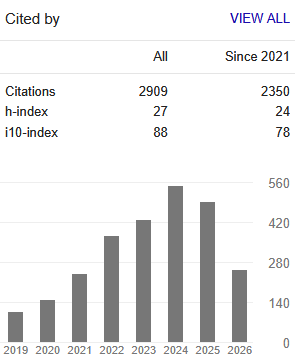
Sifat fisikokimia dan organoleptik chiffon cake gluten free berbahan tepung uwi putih (Dioscorea alata) dan tepung mocaf
Physicochemical and organoleptic properties of gluten free chiffon cake made from white yam flour (Dioscorea alata) and mocaf flour
DOI:
https://doi.org/10.35891/tp.v16i1.5882Keywords:
chiffon cake, gluten free, mocaf flour, white yam flourAbstract
Chiffon cake is a popular cake in the world and has the advantage of a soft, cotton-like texture. The utilization of white yam flour and mocaf flour needs to be studied to produce a texture similar to the texture of chiffon cake made from wheat flour. White yam flour and mocaf flour are local food sources that are useful in the context of efforts to substitute the use of wheat flour in Indonesia. The purpose of this study was to determine the best treatment of white yam flour (Dioscorea alata) concentration with mocaf flour on the physicochemical and organoleptic properties of gluten free chiffon cake. This study used a laboratory experimental method using a one-factor Completely Randomized Design (CRD) with 4 treatment levels, namely the ratio of the concentration of white yam flour and mocaf flour consisting of treatment P1 (100%: 0%), P2 (85%: 15%), P3 (70%: 30%), P4 (55%: 45%). This research was conducted 3 times. The test parameters carried out were physical properties, namely the rise of chiffon cake. Chemical properties consist of water content, fat content, crude fiber content and sugar content. Organoleptic properties consist of color, taste, aroma and texture. The results showed that the use of 100% white yam flour gave the best results on the physical, chemical, and organoleptic characteristics of gluten free chiffon cake. The use of mocaf flour increased sugar content and fat content while reducing physical and sensory properties. This shows that white yam flour
References
APTINDO. (2022). Data konsumsi tepung terigu Indonesia. Asosiasi Produsen Tepung Terigu Indonesia. https://agriprovit.id/entitas_usaha_detail/40
Asmoro, M. N., Hendrawan, Y., & Yulianingsih, R. (2014). Analisis sifat fisik dan kimia pada pembuatan tepung umbi uwi ungu (Dioscorea alata), uwi kuning (Dioscorea alata) dan uwi putih (Dioscorea alata). Jurnal Keteknikan Pertanian Tropis dan Biosistem, 2(3), 297–303.
Asmoro, N. W. (2021). Karakteristik dan sifat tepung singkong termodifikasi (MOCAF) dan manfaatnya pada produk pangan. Journal of Food and Agricultural Product, 1(1), 34. https://doi.org/10.32585/jfap.v1i1.1755
Br Sinuraya, T. U., Pranata, F. S., & Swasti, Y. R. (2024). Kualitas biskuit kombinasi tepung uwi ungu (Dioscorea alata) dan tempe kacang merah (Phaseolus vulgaris L.). Agritekno: Jurnal Teknologi Pertanian, 13(1), 42–54. https://doi.org/10.30598/jagritekno.2024.13.1.42
BPS. (2024). Impor biji gandum dan meslin menurut negara asal utama, 2017–2023. Badan Perhitungan Statistik. https://www.bps.go.id/id/statistics-table/1/MjAxNiMx/impor-biji-gandum-dan-meslin-menurut-negara-asal-utama--2017-2023.html
BSN. (1992). SNI 01-2892-1992: Cara uji gula. Badan Standardisasi Nasional. https://akses-sni.bsn.go.id/viewsni/baca/958
BSN. (1992). SNI 01-2891-1992: Cara uji makanan dan minuman. Badan Standardisasi Nasional. https://akses-sni.bsn.go.id/viewsni/baca/957
BSN. (2018). SNI 8372:2018 Roti manis. Badan Standardisasi Nasional. https://akses-sni.bsn.go.id/viewsni/baca/7962
Chandrasekara, A., & Kumar, T. J. (2016). Roots and tuber crops as functional foods: A review on phytochemical constituents and their potential health benefits. International Journal of Food Science, 2016, Article 3631647. https://doi.org/10.1155/2016/3631647
Cicilia, S. E., Tuju, T. D. J., & Ludong, M. M. (2021). Pengaruh substitusi tepung wortel (Daucus carota L.) terhadap kualitas sensoris, fisik dan kimia chiffon cake. Jurnal Teknologi Pertanian, 12(2), 73–79. https://doi.org/10.35791/jteta.v12i2.52679
Erni, Ansharullah, & Baco, A. R. (2018). The effect of uwi flour substitution on physicochemical and organoleptic characteristics of karasi cakes. Jurnal Sains dan Teknologi Pangan, 3(6), 1745–1755.
Firdausa, A. R. (2020). Pengaruh suhu dan lama pemanggangan terhadap kualitas chiffon cake. Prosiding Pendidikan Teknik Boga Busana, 15(1), 1–9.
Gusriani, I., Koto, H., & Dany, Y. (2021). Aplikasi pemanfaatan tepung MOCAF (modified cassava flour) pada beberapa produk pangan di Madrasah Aliyah Mambaul Ulum Kabupaten Bengkulu Tengah. Jurnal Inovasi Pengabdian Masyarakat Pendidikan, 2(1), 57–73. https://doi.org/10.33369/jurnalinovasi.v2i1.19142
Hapsari, T. R. (2014). Prospek uwi sebagai pangan fungsional dan bahan diversifikasi pangan. Buletin Palawija, (27), 26–38.
Ihromi Syinil, Marianah, S. Y. A. (2018). Substitusi tepung terigu dengan tepung MOCAF dalam pembuatan kue kering. Agrotek, 5(1), 73–77.
Imawan, M. L., Anandito, R. B. K., & Siswanti, S. (2020). Karakteristik fisik, kimia dan sensori cookies berbahan dasar tepung komposit uwi (Dioscorea alata), koro pedang (Canavalia ensiformis), dan tepung terigu. Jurnal Teknologi Hasil Pertanian, 12(1), 18. https://doi.org/10.20961/jthp.v12i1.24072
Kamilah, S. (2015). Pengaruh substitusi tepung tiwul tawar instan terhadap sifat organoleptik chiffon cake Lucia Tri Pangesthi. Agrotek, 4(3), 49–56.
Maretna, F. L. D., Rohaya, S., & Zaidiyah, Z. (2022). Aplikasi MOCAF (modified cassava flour) menggunakan ragi tape dan ragi tempe pada pembuatan sourdough. Jurnal Ilmiah Mahasiswa Pertanian, 7(2), 316–323. https://doi.org/10.17969/jimfp.v7i2.19688
Mehran. (2015). Petunjuk teknis tata laksana uji organoleptik nasi. Balai Pengkajian Teknologi Pertanian, Aceh.
Muliani, D., Sartono, S., & Yulianto, Y. (2023). Daya terima flakes tepung bekatul dan tepung jagung sebagai makanan selingan tinggi serat. JGK: Jurnal Gizi dan Kesehatan, 3(1), 1–11. https://doi.org/10.36086/jgk.v3i1.1580
Nur Fitasari, L., Sumarlan, S. H., & Yulianingsih, R. (2015). Pengaruh waktu blanching dan konsentrasi larutan metabisulfit terhadap karakter fisik dan kimia stik uwi putih (Dioscorea alata). Jurnal Bioproses Komoditas Tropis, 3(2), 39–46.
Rahman, M. H. R., Ariani, R. P., & Masdarini, L. (2021). Substitusi penggunaan tepung MOCAF (modified cassava flour) pada butter cookies kelapa. Jurnal Kuliner, 1(2), 89–97.
Salim, E. (2011). Mengolah singkong menjadi tepung MOCAF. Lily Publisher.
Winarti, S., & Saputro, E. A. (2013). Karakteristik tepung prebiotik umbi uwi (Dioscorea spp.). Jurnal Teknik Kimia, 8(1), 17–21.
Wuryantoro, W., & Puspitawati, I. R. (2020). Diversifikasi pangan melalui pemanfaatan sumber daya lokal “uwi†sebagai bahan mie instan. Jurnal Agri-Tek: Jurnal Penelitian Ilmu-Ilmu Eksakta, 21(2), 94–99. https://doi.org/10.33319/agtek.v21i2.74
Yusuf, M., Arfini, F., & Attahmid, N. F. U. (2016). Formulasi baruasa kaya glukomanan berbasis umbi uwi (Dioscorea alata L.). Jurnal Galung Tropika, 5(2), 97–108. https://doi.org/10.31850/jgt.v5i2.167
Zaki, M., Devi, M., & Hidayati, L. (2024). Penggunaan tepung MOCAF (modified cassava flour) dengan persentase berbeda mempengaruhi kualitas bolu kukus. Journal of Food Technology and Agroindustry, 6(1), 1–8.
Downloads
Published
Issue
Section
License
Authors send the manuscript with the understanding that if accepted for publication, the copyright of the article belongs to the authors and retains publishing rights without restriction. More...