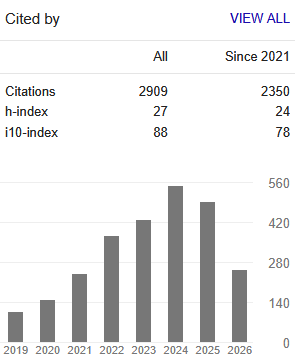
Mikroenkapsulasi ekstrak keratin (protein hewani) bulu ayam broiler (gallus domesticus) sebagai bahan fortifikasi pada susu bubuk
Microencapsulation of keratin extract (animal protein) from broiler chicken feathers (gallus domesticus) as a fortification material for powdered milk
DOI:
https://doi.org/10.35891/tp.v16i1.6060Keywords:
keratin, chicken feathers, fortified milkAbstract
In Indonesia, the use of chicken feather waste is currently limited to animal feed, even though chicken feathers contain rich nutritional value, such as keratin. With the application of appropriate technology, chicken feathers have the potential as a functional food ingredient. Currently, in Indonesia, keratin from chicken feathers is usually used in cosmetic products. This research aims to change the status of chicken feathers from waste or animal feed to food additives. Through experimental methods with Ft-ir, SEM, Psa testing and also food safety testing with XRF. keratin is an amino acid. And in the wave number range 2000-3600 cm-1, which is an alcohol peptide bond (O-H). Also found in the wave number range 1480-1575 cm-1 which is the amide II peptide bond (NH bending), and in the wave number range 1229-1301 cm-1 which is the amide III peptide bond (CN Stretching). This indicates that samples A and B both identified the presence of amino acids including cysteine, arginine, lysine, serine and threoni. Thus, the results of this study provide an in-depth understanding of the characteristics of keratin in the context of broiler chicken feathers and the potential and optimization of fortification deficiencies in powdered milk.
References
Andriani, Y., Pratama, R. I., & Hanidah, I. I. (2024). A review on chicken feather flour potential for fish feed. Torani Journal of Fisheries and Marine Science, 7(2), 171–180. https://doi.org/10.35911/torani.v7i2.34396
Apriyanti, E. (2018). Efek sentra pemotongan ayam terhadap kesehatan lingkungan masyarakat pemukiman. Jurnal Green Growth dan Manajemen Lingkungan, 7(1), 35–50. https://doi.org/10.21009/jgg.071.03
Astuti, N. B., Raya, M. K., & Rahayu, E. S. (2023). Pengaruh suhu dan tempat penyimpanan terhadap kadar air dan mutu organoleptik biskuit substitusi tepung belut (Monopterus albus Zuieuw). Action: Aceh Nutrition Journal, 8(1), 81–90. https://doi.org/10.30867/action.v8i1.811
Cardamone, J. M. (2010). Investigating the microstructure of keratin extracted from wool: Peptide sequence (MALDI-TOF/TOF) and protein conformation (FTIR). Journal of Molecular Structure, 969(1–3), 97–105. https://doi.org/10.1016/j.molstruc.2010.01.043
Dayanti, E., Rachma, F. A., & Saptawati, T. (2022). Penetapan parameter spesifik dan non spesifik ekstrak etanol biji buah trembesi (Samanea saman). Jurnal Pharmascience, 9(2), 47–55. https://doi.org/10.20527/jps.v9i2.14022
Handayani, A. S., Putra, A. R., Yaumala, A., & Chalida, M. (2015). Sifat mekanik pada isotactic polypropylene termodifikasi dengan serat bulu ayam. Seminar Nasional Polimer, 10, 1–5.
Idayanti, D., Darmawati, E., & Sutrisno. (2018). Pembuatan dan penentuan lama simpan bubuk asam sunti dalam kemasan dengan metode sorpsi. Jurnal Keteknikan Pertanian, 6(2), 151–158. https://doi.org/10.21776/ub.jkp.2018.006.02.7
Ji, J., Cronin, K., Fitzpatrick, J., & Miao, S. (2017). Enhanced wetting behaviours of whey protein isolate powder: The different effects of lecithin addition by fluidised bed agglomeration and coating processes. Food Hydrocolloids, 71, 94–101. https://doi.org/10.1016/j.foodhyd.2017.05.013
Nadia, A., Penggalih, M. H. S. T., & Huriyati, E. (2018). Pengembangan produk susu yang mengandung kalsium, inulin, dan teripang sebagai susu kaya prebiotik dan kolagen. Agritech, 38(4), 442–449. https://doi.org/10.22146/agritech.13603
Pradana, A. T., Nawatila, R., & Rachman, M. R. (2022). Karakteristik fisik mikropartikel kuersetin dengan kombinasi kitosan-natrium tripolifosfat menggunakan metode orifice ionic gelation. Jurnal Ilmiah Ibnu Sina, 7(1), 133–142. https://doi.org/10.36387/jiis.v7i1.864
Ratner, B. D., Hoffman, A. S., Schoen, F. J., Lemons, J. E., & Kohane, D. S. (Eds.). (2020). Biomaterials science: An introduction to materials in medicine (4th ed.). Academic Press.
Rukmini, N. K. S., Mardewi, N. K., & Rejeki, I. G. A. D. S. (2019). Kualitas kimia daging ayam broiler umur 5 minggu yang dipelihara pada kepadatan kandang yang berbeda. Jurnal Lingkungan dan Pembangunan, 3(1), 31–37. https://ojs.unud.ac.id/index.php/JLIP/article/view/51615
Safitri, D., Rahim, E. A., Prisma Wiryanti, P., & Sikanna, R. (2017). Sintesis karboksimetil selulosa (CMC) dari selulosa kulit durian (Durio zibethinus). Kovalen: Jurnal Riset Kimia, 3(1), 58–68. https://doi.org/10.22487/kovalen.2017.v3.i1.7846
Silva, C. S., Moutinho, C., da Vinha, A., & Matos, C. (2019). Trace minerals in human health: Iron, zinc, copper, manganese and fluorine. International Journal of Science and Research Methodology, 13(3), 57–80. https://ijsrm.net/index.php/ijsrm/article/view/1670
Sudhakararao, G., Priyadarsini, K. A., Kiran, G., Karunakar, P., & Chegu, K. (2019). Physiological role of proteins and their functions in human body. International Journal of Pharma Research and Health Sciences, 7(1), 2874–2878. https://doi.org/10.20959/ijprhs.2019.v7i1.2874-2878
Sumantri, A. (2013). Kesehatan lingkungan. Kencana Prenada Media.
Ulfah, M., Kurniawan, R. C., & Erny, M. (2021). Standarisasi parameter non spesifik dan spesifik ekstrak etanol daun jamblang (Syzygium cumini (L.) Skees). Jurnal Ilmu Farmasi dan Farmasi Klinik, 17(2), 35–42. https://doi.org/10.31942/jiffk.v17i2.4066
Yan, M., Li, B., Zhao, X., Ren, G., Zhuang, Y., Hou, H., Zhang, X., Chen, L., & Fan, Y. (2008). Characterization of acid-soluble collagen from the skin of walleye pollock (Theragra chalcogramma). Food Chemistry, 107(4), 1581–1586. https://doi.org/10.1016/j.foodchem.2007.10.020
Yudianto, D., Widhisono, P. W., Adha, S. D., Nurhasanah, N., & Hadisetyana, S. (2020). Quality evaluation of chili flakes by variation of packaging and storage temperature. Journal of Tropical Food and Agroindustrial Technology, 1(1), 11–16. https://doi.org/10.21070/jtfat.v1i01.290
Downloads
Published
Issue
Section
License
Authors send the manuscript with the understanding that if accepted for publication, the copyright of the article belongs to the authors and retains publishing rights without restriction. More...